
Anti-Cardiac Troponin I (cTnI) Monoclonal Antibody (Coupling)
Matched detection antibody showing limit of detection (LoD) down to 10 pg/mL in fluorescent lateral flow and quantitative POCT systems.
Technical Datasheet & Analytical Specifications
Biological Target Biology & Epitope Mechanism
Engineered to target the stable central core (amino acids 30–110) of human cardiac Troponin I (cTnI). The epitope is 100% resistant to circulating calpain/caspase proteolysis, Heparin-induced conformational masking, and endogenous autoantibody interference, guaranteeing linear stoichiometric signal recovery in early Acute Myocardial Infarction (AMI).
Industrial Wet-Lab SOP & Dispensing Formulation
1.2 - 1.8 mg/mL in 20 mM Sodium Phosphate Buffer (pH 7.4). Dispense rate: 1.0 µL/cm.
Adjust 40nm gold or 200nm Europium latex beads to pH 8.4 ± 0.1. EDC/Sulfo-NHS covalent activation yields >90% coupling efficiency.
0.5% Casein + 1.0% Bovine Serum Albumin (BSA) + 0.1% ProClin 300 in 50 mM Tris-HCl (pH 7.8).
Strip drying in humidity-controlled cleanroom (RH < 18%) for 4 hours at 35°C.
Matched Reagent Pairing & Assay Architecture
Analytical Sensitivity & Performance Benchmarks
Lot-Specific Certificate of Analysis (CoA) Guarantee
Every order includes comprehensive analytical documentation including SDS-PAGE densitometry scans, ELISA binding curves, protein concentration (BCA/A280), and sterility testing reports. Manufactured under rigorous batch quality assurance protocols.
Technical & Sourcing FAQ for Anti-Cardiac Troponin I (cTnI) Monoclonal Antibody (Coupling)
Does PVBSP1403 recognize both free cTnI and the ternary cTnI-C-T complex?
Yes. Epitope binning confirms equitable binding affinity (KD < 0.15 nM) toward free human cardiac Troponin I and binary (I-C) / ternary (I-T-C) complexes in patient blood.
How is skeletal muscle troponin cross-reactivity prevented?
Hybridoma clones are screened against high-concentration purified slow-skeletal and fast-skeletal troponin I, showing <0.01% cross-reactivity up to 5,000 ng/mL.
Can this reagent pair be used for Quantitative Europium FIA meters?
Yes. Supplied in amine-free, glycerol-free PBS formulation ready for direct EDC/Sulfo-NHS coupling to carboxylate-modified Europium (Eu3+) microspheres.
What shipping conditions are used for domestic India supply?
Shipped at 2–8°C using validated insulated cold-chain shippers with temperature data loggers directly from Bangalore (24–48 hours nationwide).
B2B Evaluation Samples & Bulk PO
Order 1mg – 5mg test vials for rapid assay optimization or request bulk commercial lot reservations with full Certificate of Analysis.
Related Diagnostic Reagents & Matched Antibodies
Cardiac Troponin I (cTnI) Control Antigen
High-purity recombinant human cardiac Troponin I (cTnI) complex for acute myocardial infarction (AMI) kit validation.
Anti-Cardiac Troponin I (cTnI) Monoclonal Antibody (Coat)
Ultra-high affinity capture antibody recognizing amino acids in the stable central region of cTnI, unaffected by autoantibodies or phosphorylation.
Technical Formulation Guides for Cardiac Markers Assays

Custom Rabbit Monoclonal vs. Mouse Hybridoma Antibody Production in India: Affinity, QC & Scale-Up Guide
When mouse hybridomas fail to yield picomolar affinity against small haptens, phospho-epitopes, or conserved cardiac markers like cTnI, custom rabbit monoclonal antibodies close the sensitivity gap. Here is our bench-level guide to custom monoclonal antibody development, 8-point QC acceptance criteria, and commercial scale-up in India.
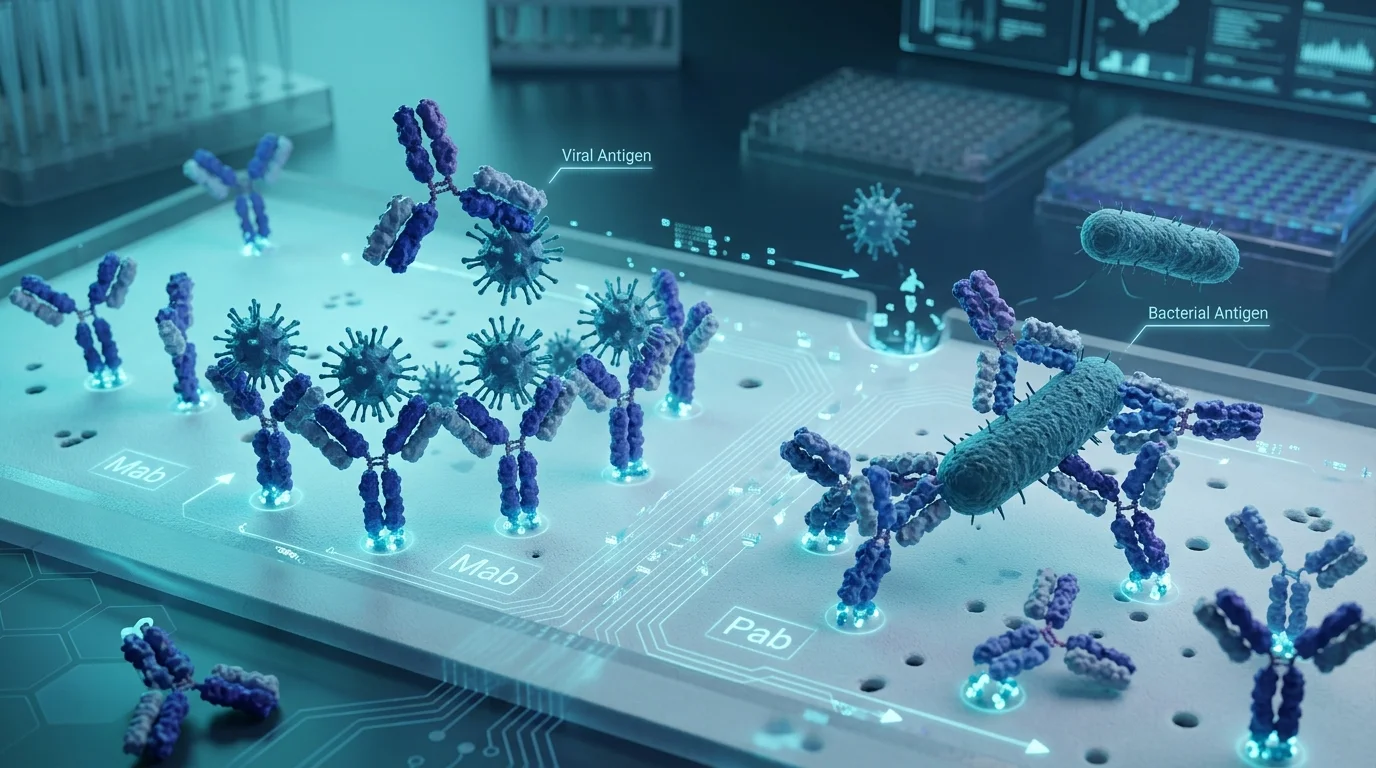
India Custom Antibody Service Market & Custom Assay Development: How to Buy Monoclonal Antibodies Online (2026 Buyer Guide)
Why Indian IVD kit manufacturers are shifting away from 4-week US/EU imports toward domestic custom antibody production and turnkey custom assay development in Bangalore. Complete 2026 breakdown of India custom antibody market economics, landed cost savings, online 1mg–5mg sample ordering, and CDSCO/ISO 13485 CoA verification.
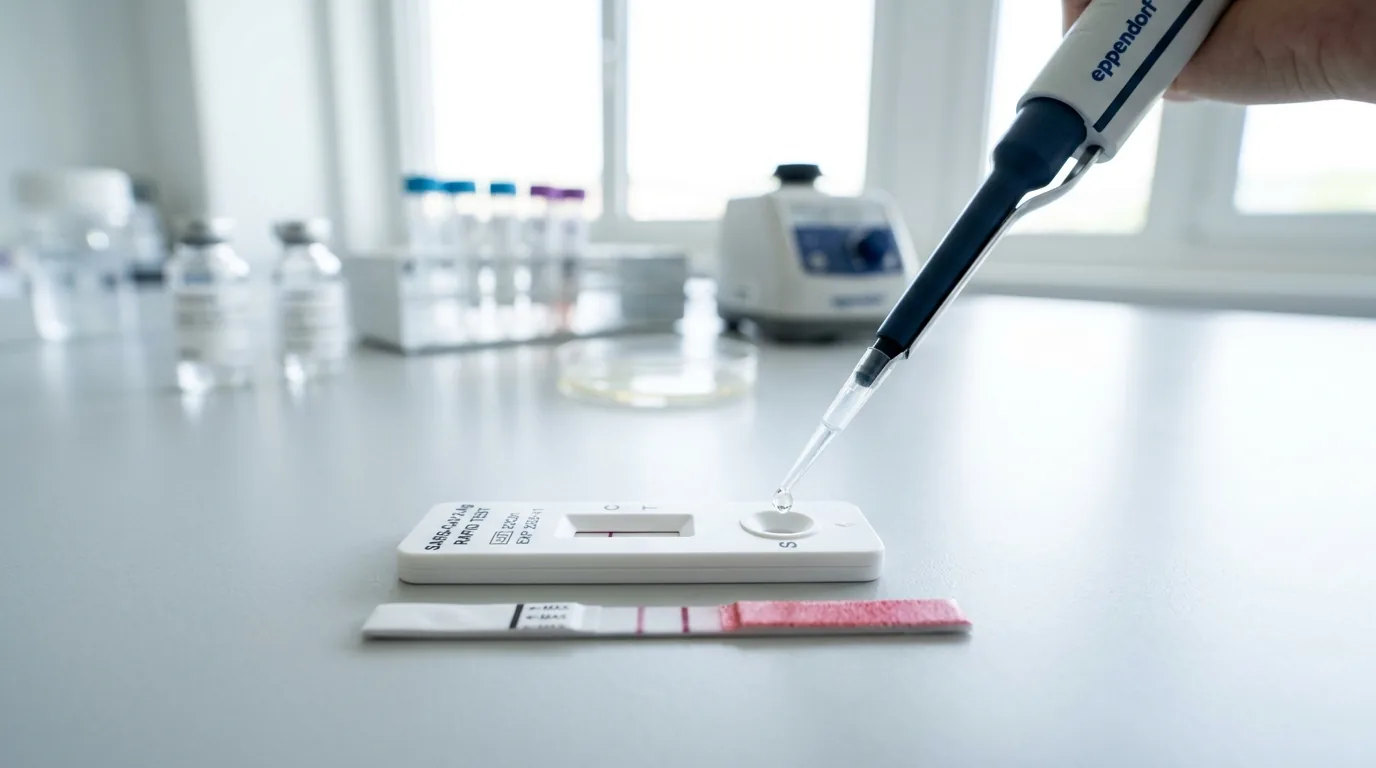
Solving High Background Noise and False Positives in Lateral Flow Immunoassays
Stop rewriting your blocking buffer recipe every time a test strip streaks pink. A frequent root-cause pattern across assay tech transfers traces back to dispensing humidity spikes, over-salted gold conjugates, or mismatched capillary flow rates.