# Custom Rabbit Polyclonal Antibody Production in India: 45-Day vs. 70-Day Immunization Protocols & Format Selection
## 1. Executive Summary: Why Polyclonal Antibodies Remain Indispensable in Modern IVD
> **Practical IVD Engineering Rule:** *For lateral flow Control Lines (C-Line), Western Blot confirmation, immunoprecipitation, denatured FFPE immunohistochemistry, and rapid 7-week assay feasibility checks, antigen-affinity purified custom rabbit polyclonal antibodies deliver higher signal amplification and multi-epitope resilience at roughly 20–25% of the upfront cost of a monoclonal campaign.*
A common question asked by diagnostic R&D teams and academic principal investigators sourcing reagents in India is: **"Are custom antibodies available in monoclonal and polyclonal formats?"** The answer is **yes**—and selecting the wrong format for your development stage either wastes 3 months of launch timeline or exposes commercial production to finite lot exhaustion.
Unlike monoclonal antibodies that recognize a single discrete epitope, **custom polyclonal antibodies** represent a heterogeneous population of B-cell clones recognizing multiple distinct epitopes across the surface of the target protein. Because several antibody molecules can simultaneously bind one antigen molecule, polyclonal reagents amplify detection signal dramatically and remain remarkably tolerant to slight pH shifts, detergent exposure, chemical fixation, or minor amino acid polymorphisms across pathogen variants.
This technical manual lays out exact **custom rabbit antibody production** protocols—comparing standard 70-day versus express 45-day New Zealand White (NZW) rabbit schedules, Protein A versus antigen-specific affinity purification recovery math, cross-adsorption strategies for clean IVD Control Lines, and objective criteria for deciding between custom polyclonal and custom monoclonal formats. Explore turnkey packages on our [Custom Polyclonal Antibody Production Service](/services/custom-polyclonal-antibody-production) page or compare both tracks on our [Custom Antibody Services Hub](/services).
---
## 2. Are Custom Antibodies Available in Monoclonal and Polyclonal Formats? (Format Selection Matrix)
Both formats are engineered under ISO-aligned quality systems at SMD Life Sciences Bangalore, and many commercial IVD assays intentionally combine both—for example, deploying a high-specificity mouse monoclonal antibody on the Test Line while striping a cross-adsorbed **custom rabbit polyclonal antibody** (such as [Anti-Mouse IgG Goat/Rabbit Coat PVBSP5005](/products/PVBSP5005) or [Anti-Chicken IgY Coat PVBSP5008](/products/PVBSP5008)) on the Control Line.
| Decision Criterion | Custom Rabbit Polyclonal Antibody | Custom Monoclonal Antibody (Mouse / Rabbit) | Optimal Recommendation |
| :--- | :--- | :--- | :--- |
| **Turnaround Time** | **45 Days (Express)** or **70 Days (Standard)** | 12 – 20 Weeks | Choose **Polyclonal** for urgent validation, rapid proof-of-concept, or secondary/control-line reagents |
| **Epitope Coverage** | Multi-epitope (5–15+ distinct surface epitopes) | Single discrete epitope | Choose **Polyclonal** for variable viral strains, denatured samples, WB, IP, and high signal amplification |
| **Batch Continuity & Scale** | 40 – 80 mL terminal serum per rabbit (~40–150 mg purified IgG); pool 2–4 rabbits for gram-scale control lines | Unlimited perpetual supply via MCB or plasmid DNA | Choose **Monoclonal** for Test Line capture/detector pairs in commercial IVD kits (>100K tests/year) |
| **Sensitivity to Antigen Denaturation** | Very Low (tolerates SDS, formalin fixation, heat, mild oxidation) | High (single epitope conformational loss destroys binding) | Choose **Polyclonal** for Western Blot, FFPE IHC, and harsh extraction buffers |
| **Upfront Project Cost** | Low (~1/4th to 1/5th of monoclonal development cost) | Moderate to High (amortized over multi-year bulk production) | Use **Polyclonal** first to validate target biology, then advance winners to [Custom Monoclonal Development](/services/custom-monoclonal-antibody-development) |
| **Cross-Reactivity Control** | Requires negative cross-adsorption column for high specificity | Inherently monospecific by clonal selection | Always pair polyclonal production with antigen-affinity + species cross-adsorption for clinical serum matrices |
---
## 3. Host Species Engineering: Why New Zealand White (NZW) Rabbits Are the Gold Standard
While custom polyclonal antibodies can also be raised in mice, goats, sheep, or chickens (egg yolk IgY), **Specific Pathogen-Free (SPF) New Zealand White rabbits** (2.2–2.5 kg, 10–12 weeks old at priming) remain the primary workhorse for diagnostic and life sciences R&D:
| Host Species | Average Serum / Egg Yield | Purified Total IgG Yield | Antigen-Specific Affinity IgG Yield | Best Technical Use Case |
| :--- | :--- | :--- | :--- | :--- |
| **NZW Rabbit** | 60 – 90 mL (production + terminal bleeds) | 300 – 600 mg | **15 – 60 mg** (2–10% of total IgG) | Primary choice for high-affinity custom pAbs, peptide antibodies, IHC, ELISA, and rapid tests |
| **BALB/c Mouse** | 0.8 – 1.5 mL per mouse | 5 – 10 mg | 0.3 – 1.0 mg | Tiny antigen budgets (<200 µg available) or pre-screening immunogenicity before hybridoma fusion |
| **Chicken (IgY)** | 15 – 20 eggs/month (~100 mg IgY/egg) | 1,500 – 2,500 mg/month | 50 – 150 mg/month | Non-invasive harvesting; zero cross-reactivity with human Rheumatoid Factor (RF) or mammalian Fc receptors |
| **Goat / Sheep** | 500 – 1,500 mL per bleed cycle | 5 – 15 Grams | 250 – 1,000 mg | Commercial multi-gram bulk secondary antibodies and lateral flow Control Line antisera |
**Critical Immune Hygiene Practice:** Always immunize a minimum of **two (2) NZW rabbits per antigen**. Individual outbred rabbits exhibit natural biological variation in MHC class II presentation; running 2 rabbits in parallel ensures at least one animal delivers high-affinity titers (>1:128,000) while providing a larger pooled antiserum reserve.
---
## 4. Complete Rabbit Immunization Schedules: Standard 70-Day vs. Express 45-Day
Both protocols utilize sterile, endotoxin-controlled antigen (<50 EU/mg) emulsified 1:1 (v/v) in adjuvant to form a stable water-in-oil depot (verified by the water-drop integrity test prior to subcutaneous injection across 4–6 dorsal sites).
### 4.1 Standard 70-Day High-Affinity Rabbit Immunization Protocol (Recommended for IVD & Commercial Kits)
Longer rest intervals between boosts drive stronger germinal center affinity maturation and shift the immune response overwhelmingly from early low-affinity IgM to high-affinity IgG.
| Day | Procedure | Antigen Dose (per Rabbit) | Adjuvant System | Bleed & QC Action |
| :--- | :--- | :--- | :--- | :--- |
| **Day 0** | Pre-Immune Bleed + Primary Immunization | 300 – 500 µg (protein) or 500 µg (KLH-peptide) | Complete Freund's Adjuvant (CFA, 1:1 emulsion) or TiterMax Gold | Collect 3–5 mL **Pre-Immune Control Serum** (mandatory baseline for ELISA background subtraction) |
| **Day 21** | Boost #1 | 200 – 250 µg | Incomplete Freund's Adjuvant (IFA, 1:1 emulsion) | Subcutaneous injection at 4 fresh dorsal sites |
| **Day 35** | Boost #2 | 200 – 250 µg | IFA (1:1 emulsion) | Monitor animal health and injection site tolerance |
| **Day 42** | **Test Bleed #1 (5 mL)** | — | — | Indirect ELISA titration vs. Pre-Immune serum (Target Gate: >1:32,000) |
| **Day 49** | Boost #3 | 150 – 200 µg | IFA (1:1 emulsion) | Final affinity maturation boost |
| **Day 56** | **Production Bleed #1 (20 mL)** | — | — | ELISA titer verification (Target: **>1:64,000 – 1:256,000**); optional client functional sample |
| **Day 63** | Boost #4 (Optional / High-Yield) | 150 µg | IFA or aqueous PBS boost | Maximizes circulating plasma cell secretion prior to harvest |
| **Day 70** | **Terminal Bleed (50–70 mL)** | — | — | Whole serum collection, clot retraction at 4°C, centrifugation (3,000 × g, 15 min), transfer to purification |
### 4.2 Express 45-Day Rabbit Protocol (Rapid Feasibility & Urgent Timelines)
When assay timelines cannot wait 10 weeks, compressed boosting (Days 0, 14, 28, and 38) with an immunostimulatory proprietary/saponin-oil adjuvant delivers high-titer antiserum in **45 days**:
* **Day 0:** Pre-bleed + Prime (400 µg antigen)
* **Day 14:** Boost #1 (250 µg)
* **Day 24:** Test Bleed #1 (ELISA confirmation)
* **Day 28:** Boost #2 (200 µg)
* **Day 38:** Boost #3 (150 µg)
* **Day 45:** Final Harvest (50–65 mL serum per rabbit)
*Bench Trade-Off:* Express 45-day sera routinely reach ELISA titers of 1:64,000+, making them ideal for Western Blot, antigen capture feasibility, and peptide validation. However, for ultra-sensitive picogram clinical immunoassays, the Standard 70-day protocol produces superior affinity maturation ($K_D$) and lower off-rates ($k_{off}$).
---
## 5. Downstream Purification Blueprint: Protein A vs. Antigen-Specific Affinity Chromatography
Raw rabbit antiserum contains approximately **8–12 mg/mL of total IgG**, of which only **2% to 10%** is actually specific to your target immunogen; the remaining 90%+ consists of unrelated background rabbit immunoglobulins against environmental microbes and diet antigens. Selecting the correct purification tier directly determines signal-to-noise ratio (SNR).
### 5.1 Three Industrial Purification Tiers
| Purification Method | Specificity Enrichment | Typical Yield (per 50 mL Serum) | Best Diagnostic Application |
| :--- | :--- | :--- | :--- |
| **1. Ammonium Sulfate / Caprylic Acid Fractionation** | Partial IgG enrichment (~75–85% pure IgG; retains non-specific IgG) | 300 – 450 mg | Low-cost bulk coating where excess non-specific IgG does not impair strip sensitivity |
| **2. Protein A Affinity Chromatography** | **>95% pure total rabbit IgG** (all rabbit IgG binds Protein A strongly) | 250 – 400 mg | Standard ELISA coating, Western Blot, and workflows where target antigen is too scarce for resin coupling |
| **3. Antigen-Specific Affinity Chromatography (Gold Standard)** | **>98% target-specific IgG** (removes 90–98% of non-specific background IgG!) | **15 – 50 mg** | **Mandatory for Lateral Flow Conjugation**, high-sensitivity Sandwich ELISA, phospho-specific IHC, and minimal background noise |
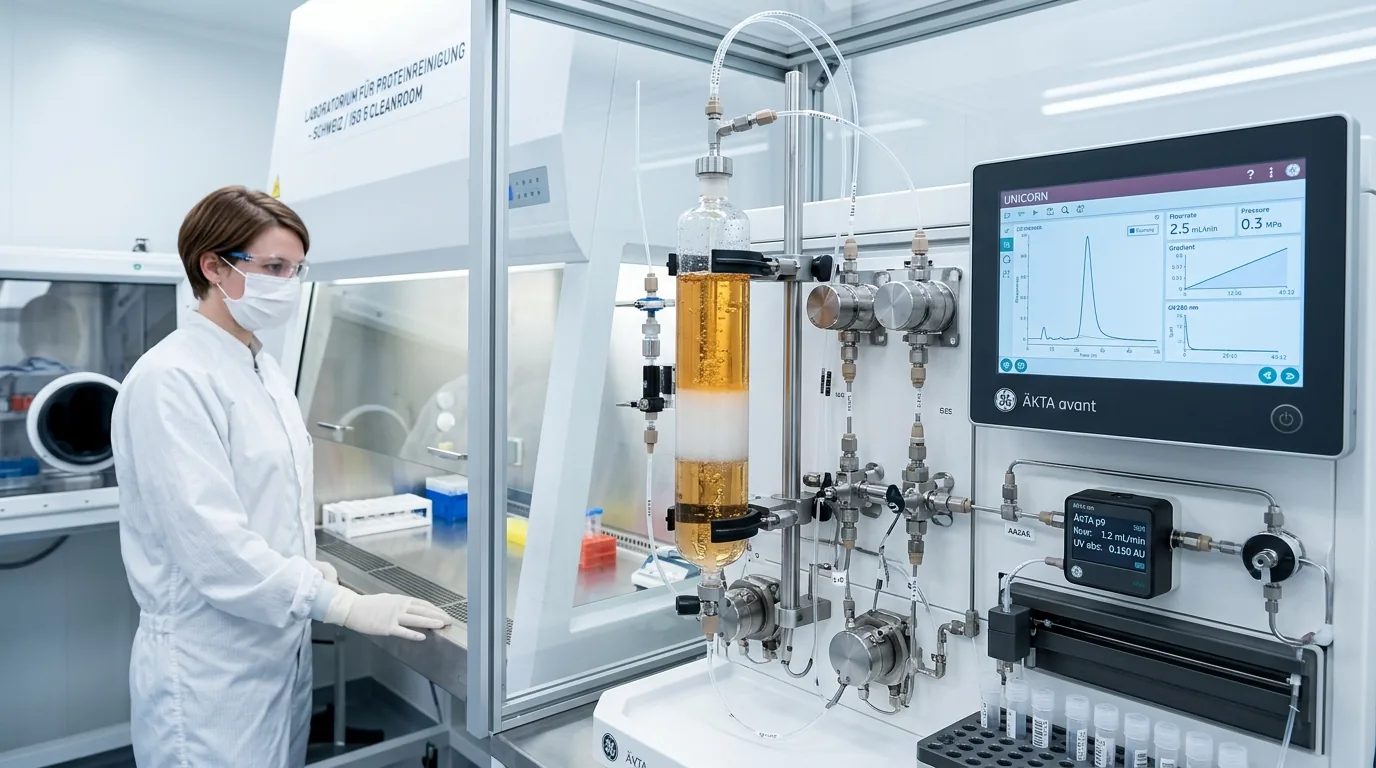
### 5.2 Antigen-Affinity Column Chemistry & Elution SOP
1. **Resin Coupling:** Immobilize 2–5 mg of target antigen (or free peptide) onto CNBr-activated Sepharose 4B or SulfoLink Iodoacetyl resin (for cysteine-terminated peptides). Confirm >85% coupling efficiency by measuring unbound $A_{280}$ in the flow-through.
2. **Serum Clarification & Binding:** Dilute clarified antiserum 1:1 in 20 mM PBS (pH 7.4), filter through a 0.45 µm PES filter, and recirculate over the antigen column at 0.5–1.0 mL/min for 2 hours at 4°C.
3. **High-Salt Stringency Wash:** Wash with 10 column volumes (CV) of PBS + 500 mM NaCl + 0.05% Tween-20 to strip weakly bound non-specific serum proteins, followed by 5 CV plain PBS to remove detergent.
4. **Controlled Low-pH Elution:** Elute bound antigen-specific IgG using 0.1 M Glycine-HCl (pH 2.7) in 1.0 mL fractions directly into collection tubes pre-loaded with 100 µL of **1.0 M Tris-HCl (pH 9.0)** for instantaneous pH neutralization.
5. **Buffer Exchange & Sterile Filtration:** Pool peak fractions ($A_{280} > 0.2$), dialyze exhaustively against 3 changes of sterile 10 mM PBS (pH 7.4, carrier-free), pass through a 0.22 µm low-protein-binding syringe filter, and run final CoA QC.
---
## 6. Cross-Adsorption Engineering for Clean IVD Lateral Flow Control Lines
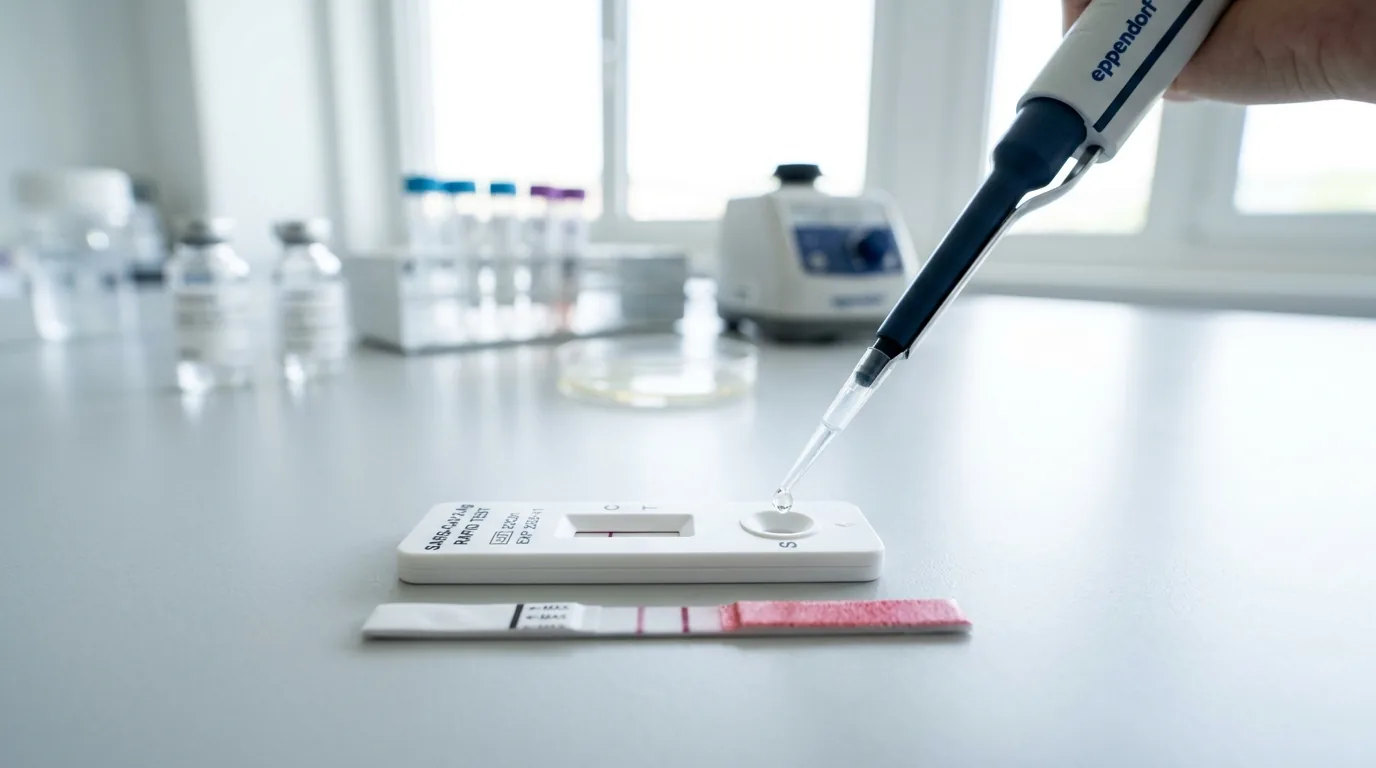
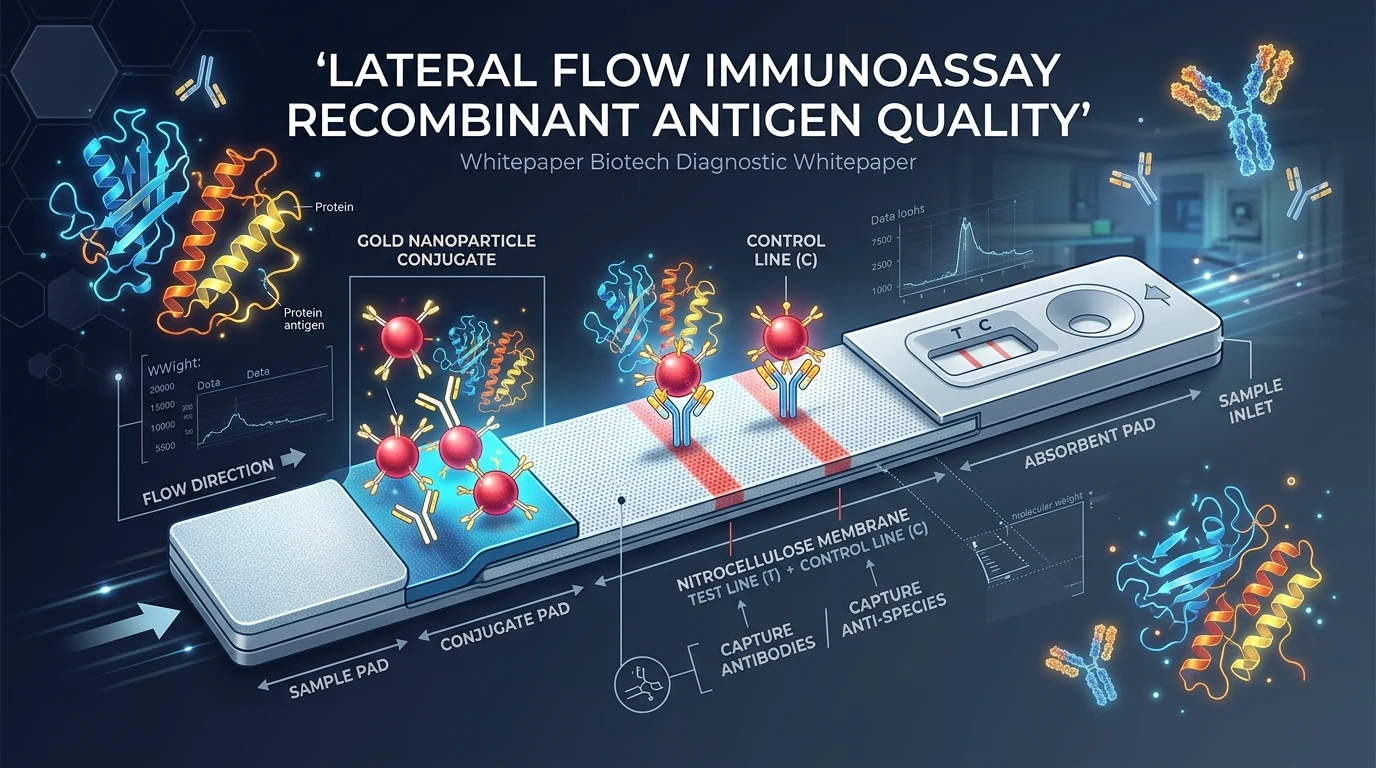
Every rapid diagnostic test (Dengue, Malaria, HIV, Cardiac Troponin, hCG) requires a sharp, zero-bleed Control Line (C-Line) that binds migrating mouse monoclonal gold conjugates while remaining **100% blind to human patient serum immunoglobulins**.
Because mammalian IgG heavy chains share conserved constant-domain sequences, unabsorbed Rabbit Anti-Mouse IgG will cross-react with endogenous human IgG present at 10–15 mg/mL in patient blood—causing smeared control lines or false background haze.
**Our Cross-Adsorption Solution:**
* Pass purified Rabbit Anti-Mouse IgG sequentially over an immobilized **Human IgG / Pooled Human Serum Sepharose column** (subtractive affinity chromatography).
* Verify **< 0.5% cross-reactivity** against human IgG, IgM, and IgA by direct ELISA at 10 µg/mL coating density.
* Looking for immediately available, pre-validated Control Line reagents? Inspect our Bangalore-manufactured [Anti-Mouse IgG Goat/Rabbit Coat (PVBSP5005)](/products/PVBSP5005), [Mouse IgG Conjugation Grade (PVBSP5004)](/products/PVBSP5004), and zero-RF-interference [Anti-Chicken IgY Coat (PVBSP5008)](/products/PVBSP5008) / [Chicken IgY Conjugation Grade (PVBSP5007)](/products/PVBSP5007).
---
## 7. Analytical Quality Control & Storage Stability Specifications
Every **custom rabbit polyclonal antibody** delivered by SMD Life Sciences includes a lot-specific Certificate of Analysis verifying:
* **Indirect ELISA Endpoint Titer:** Guaranteed **≥ 1:64,000** (defined as highest dilution yielding OD450 ≥ 2× pre-immune negative control at 1 µg/mL antigen coat).
* **Purity:** ≥ 95% intact IgG via reducing and non-reducing SDS-PAGE.
* **Concentration:** Verified by $A_{280}$ ($
arepsilon_{0.1%} = 1.40$ for rabbit IgG) at 1.0–3.0 mg/mL.
* **Carrier-Free Readiness:** Supplied in pure 10 mM PBS (pH 7.4) without BSA or glycerol so you can directly conjugate colloidal gold, europium nanoparticles, or HRP without dialysis loss. (For best conjugation practices, read our [Carrier-Free Antigen & Conjugation Guide](/insights/carrier-free-recombinant-antigens-conjugation-efficiency).)
* **Storage Stability:** Aliquot into single-use tubes and store at **-20°C or -80°C** for 36+ months without repeated freeze-thaw cycles. Working aliquots at 2°C–8°C remain stable for 6 months with 0.05% ProClin 300 (preferred over Sodium Azide when HRP enzymes are present).
---
## 8. Troubleshooting Custom Polyclonal Campaigns: 6-Mode Bench Matrix
| Observed Bench Issue | Primary Root Cause | Corrective Protocol Action |
| :--- | :--- | :--- |
| **1. Strong Peptide Titer, Fails Against Full-Length Protein** | Selected peptide sequence is buried inside the folded core of the native protein | Redesign immunogen targeting solvent-exposed N-/C-terminal loops verified via AlphaFold/3D crystal structure |
| **2. High Background Across Negative Human Serum** | Using Protein A IgG (contains 95% non-specific IgG) or cross-reactivity to human Fc | Switch to **Antigen-Specific Affinity Purification** plus subtractive Human IgG cross-adsorption column |
| **3. White Precipitate Forms After Thawing** | Repeated freeze-thaw cycles or overly concentrated IgG (>5 mg/mL) in low-salt buffer | Keep IgG at 1.0–2.0 mg/mL in 150 mM NaCl PBS; spin at 12,000 × g for 5 min and use clear supernatant |
| **4. Antibody Loses Activity After Acid Elution** | Acid-labile high-affinity subpopulation denatured at pH 2.5 | Switch affinity elution to gentle **3.5 M MgCl2 (pH 7.2)** or **0.1 M Glycine pH 3.0** with immediate Tris pH 9.0 neutralization |
| **5. Low Affinity Yield (<5 mg from 50 mL Serum)** | Immunogen degraded rapidly in vivo or weak T-cell help on small peptide | Conjugate peptide to KLH at 1:1 mass ratio; extend immunization from 45-day to 70-day protocol with 2 rabbits |
| **6. Control Line Streaks Pink on Lateral Flow** | Excess polyclonal striping concentration (>1.5 mg/mL) or non-adsorbed human IgG interference | Drop striping concentration to 0.8–1.0 mg/mL in 10 mM PBS + 2% Trehalose and verify cross-adsorption (<0.5% human IgG binding) |
---
## 9. Start Your Custom Rabbit Polyclonal Antibody Campaign
Whether you need a rapid 45-day proof-of-concept rabbit antiserum or multi-hundred-milligram cross-adsorbed affinity-purified polyclonal antibodies for commercial IVD manufacturing, our Bangalore team provides transparent milestone ELISA data from Pre-Immune bleed through final CoA release.
* **Request Custom Polyclonal Quote & Timeline:** [Custom Polyclonal Antibody Production Service](/services/custom-polyclonal-antibody-production)
* **Need Perpetual Clonal Supply Instead?** Explore [Custom Monoclonal Antibody Development](/services/custom-monoclonal-antibody-development)
* **Ready-to-Ship Control Line & IVD Reagents:** [Browse All 70 Catalog SKUs](/products)
Home/Scientific Insights/Custom Rabbit Polyclonal Antibody Production in India: 45-Day vs. 70-Day Immunization Protocols & Format Selection
Technical Whitepaper•Published: 18 Nov 2026•11 min read•By Swatilina Das
Custom Rabbit Polyclonal Antibody Production in India: 45-Day vs. 70-Day Immunization Protocols & Format Selection
Need Specific Lot CoA or Matched Antibody Pairs?
Our Electronic City, Bangalore scientific coordination desk provides lot-specific analytical data, 1 mg–5 mg evaluation samples, and custom conjugation support for IVD kit manufacturers.
Continue Reading • R&D Knowledge Base
View All Whitepapers →